


Song Recording Mar 24, 2026

Written by Aankuur Bhogia
Almost every song starts the same way. A melody hummed into a phone. A hook typed into notes at 1am. A jingle brief with a deadline attached.
The distance between that and a finished track is where most independent musicians get stuck. Not because the idea is weak. Because turning an idea into produced audio takes tools, time and ears most people don't have on their own.
That's the gap this studio exists for. It takes a project from wherever it is right now through to a finished, mastered track, with people who do this for a living instead of tutorials you're piecing together at midnight.
This isn't a one-size-fits-all booth. The gear and the workflow flex depending on what you bring in.
Sessions leave room for the part of songwriting that never goes in a straight line. Trying a chorus two ways. Swapping an instrument mid-session. Deciding the song actually wants to be slower than the demo.
That flexibility is hard to get in a rented hourly slot with someone who doesn't know the project.
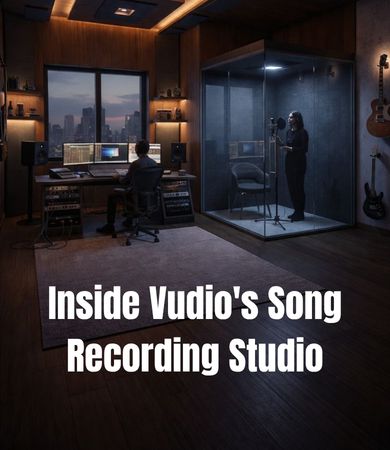
Recording in an untreated room is the biggest single gap between a home demo and something that sounds finished. Reflections and background noise get baked into the take, and they're hard to undo later. A proper song recording studio removes that at the source.
A great microphone in a bad room still records the room. Untreated walls smear the clarity of a vocal in ways you can't really fix afterwards without making it sound processed and lifeless.
A treated space is what lets a good mic do its job.
A lot of the people who'd get the most out of a session assume it isn't for them, because they can't read music or don't know the vocabulary. That's backwards.
Humming a melody is enough. So is describing a mood, or pointing at a reference song and saying "like that, but different."
Turning that into an actual arrangement is exactly what a producer and engineer are there for.
This matters most on the brand side. A business owner who needs a jingle rarely arrives with a finished composition. They arrive with a mood, a length, and maybe a line of copy. Turning that into finished audio is a different skill than performing music.
Just as useful is someone in the room who can catch a pitchy take, suggest a better arrangement, or hear that two instruments are muddying each other.
That's the kind of feedback that's almost impossible to give yourself while you're the one performing.
A session doesn't end when the recording stops.
Mixing balances every element against the others. Mastering gets the final file sounding right at the correct loudness everywhere it lands, whether that's a phone speaker, car audio or studio monitors.
Skipping either step is the most common reason a self-produced track sounds noticeably different from whatever sits next to it on a playlist.
Independent artists turning a phone recording into a real release. Composers and ad professionals working to a deadline. And anyone who's written something and isn't sure what to do with it next. If that's you, get in touch and tell us what you're working on.